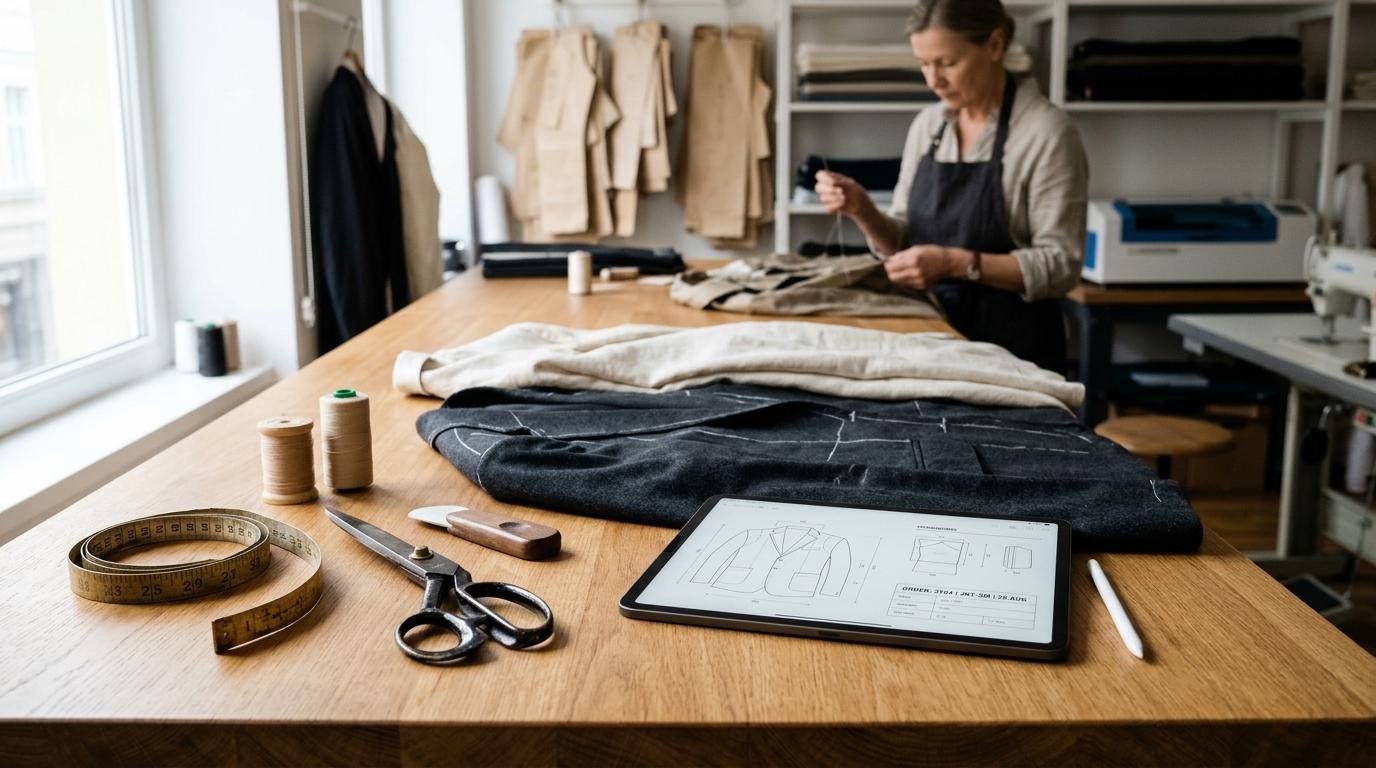
Why Factory Floors Shouldn't Have Your Customers' Personal Data: The Case for Blind Tailoring
Learn why sharing customer names and addresses with contract factories exposes DTC brands to legal liability, and how Blind Tailoring solves it.
The Overlooked Security Hole in Apparel Supply Chains
Every direct-to-consumer apparel brand invests heavily in digital security: SSL certificates, PCI-compliant payment gateways, and two-factor authentication. Yet, the moment a bespoke or made-to-measure order is sent to production, a massive data privacy breach frequently occurs on the factory floor.
In most conventional custom tailoring setups, a merchant exports Shopify packing slips or order confirmation emails directly to third-party cutting rooms or overseas workshops. These printouts contain sensitive Personally Identifiable Information (PII):
- Full customer names and residential shipping addresses
- Personal phone numbers and email contacts
- Private physical body measurements (chest, waist, hip, inseam)
These paper sheets sit on crowded cutting tables, are handled by dozens of workshop staff, and often end up in unsecured recycling bins. In the age of GDPR and CCPA, this is a significant legal liability.
What is Blind Tailoring?
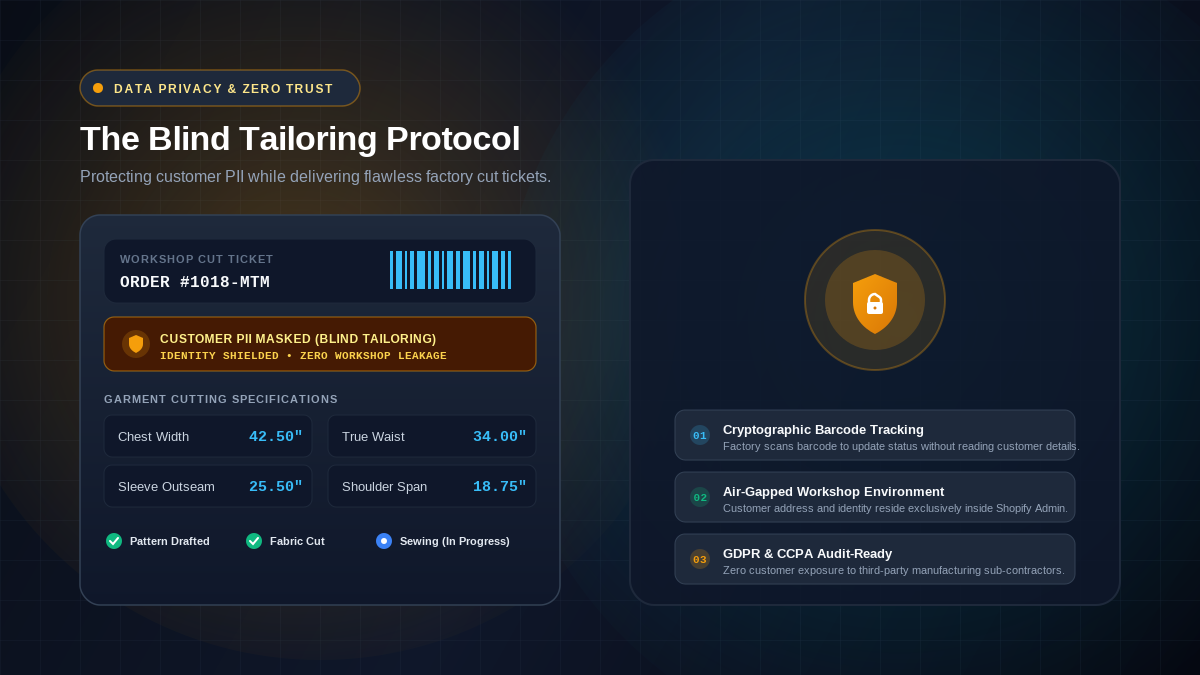
Blind Tailoring is an architectural privacy protocol pioneered by EaseTrue. It ensures that workshop staff and pattern cutters receive 100% of the technical specifications required to craft the garment, while stripping 100% of the customer's personal identity.
A tailor needs to know that the chest is 40.5 inches and the fabric is 100% Peach Oxford cotton. A tailor never needs to know the buyer's home address, phone number, or last name.
Anatomy of a Blind Tailoring Cut Ticket
When an order moves to "In Production" in EaseTrue's manufacturing Kanban, the system generates a standardized factory cut ticket featuring:
- Anonymized Order Identifier (#1018): A unique internal production token that links back to the Shopify order only inside the merchant's encrypted admin.
- Industrial Code-128 Vector Barcode: Compatible with standard warehouse laser and optical scanners to track work-in-progress without manual data entry.
- Embedded Garment Visual Thumbnail: Eliminates pattern mix-ups by showing the cutting team the exact silhouette, colorway, and collar style.
- Dual-Column Precision Metrics: Customer body dimensions paired alongside target ease values for foolproof pattern drafting.
- 7-Stage Workshop Quality Checklist: Pattern Drafting, Fabric Cutting, Primary Stitching, Collar Assembly, Hardware, Steaming, and Final QC with tailor initials sign-off.
Protect Your Brand, Streamline Your Workshop
Blind Tailoring isn't just about privacy compliance—it's about operational excellence. Clean, standardized spec sheets reduce workshop errors by over 40% and eliminate production disputes between merchants and contract tailors.
As apparel manufacturing becomes increasingly distributed, brands that prioritize security and standardization will command the highest customer trust.